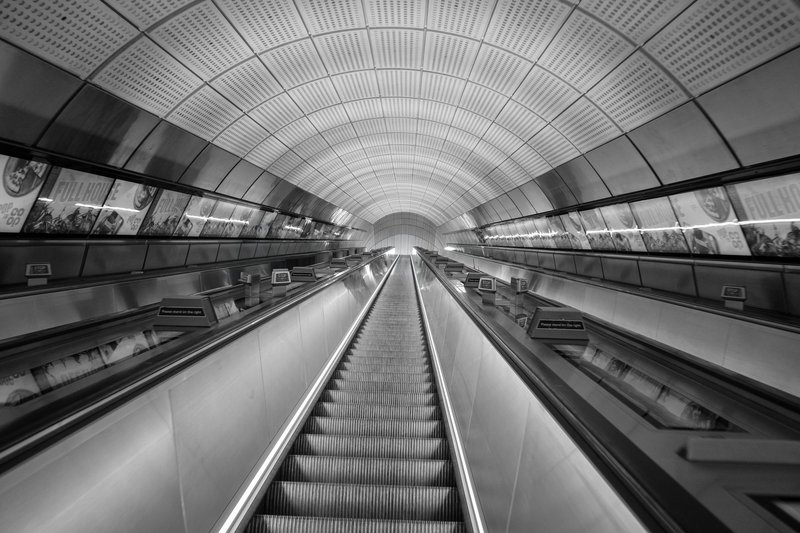
The photographs
The Map
where it all is · tap a point for its dayTap any point for the day it belongs to. The two larger gold dots are the match venues — the Etihad (City v Coventry) up north and the Emirates (Arsenal v Chelsea) back in London. The dashed line is the car-free rail run: London → Manchester → back to London.
▸The Ten Days
the plan · every day, hour by hour
What the ten days were built to be, hour by hour — the Photographers’ Gallery, St Paul’s at dawn, the Barbican, Rowley Way, the Royal Opera House, Greenwich, the Etihad…
The Ten Days
the plan · every day, hour by hourWhat the ten days were built to be, hour by hour — the Photographers’ Gallery, St Paul’s at dawn, the Barbican, Rowley Way, the Royal Opera House, Greenwich, the Etihad…
A football trip is the excuse. The real journey is learning to see.
The Threads
what the trip is really aboutA football trip is the excuse. The real journey is learning to see.
And under all of it, one rhythm: loud ↔ quiet. Sixty thousand voices, then an empty concrete street at first light. A city that never stops, then a hushed room with a late Rembrandt in it. The contrast isn't a compromise — it's the medicine. You feel each half more sharply for the other.
Move slow. Drink the good coffee. Make the picture. Let the rest be quiet.
The Days
three movements · two matches · the rest left looseEach day carries a locator map (tap to jump to the full map), its theme, and an energy read — the trip's loud↔quiet pulse, at its stillest on a dawn walk and its loudest at the two grounds. Read each day down the left edge: clock time, then how long it takes. Under every title is the logistics line — the line or the walk, the cost, what needs booking. A gold time is fixed by someone else's clock — the flights, the inter-city trains, the two matches, a booked table or tour — and everything else bends around it; the rest is a suggested shape, not a schedule.
Arrive. The trip begins the moment you stop rushing.
Elizabeth line from Heathrow to Bond St, then ten minutes north to Portland Place. Marylebone is the base for all five London nights — Regent's Park at the top of the road, the High St around the corner, and no repacking until Thursday. Drop the bags, drop the pace. A morning landing buys you the whole first day; don't spend it rushing.
The plan had the British Museum at 12:30 and a coffee nowhere. After a redeye into steady rain, the coffee won. Chiltern Street on foot from the door, sitting down, and the first hour of the trip spent not moving — which is the correct use of a landing day. The museum was picked up unplanned on Day 2 instead, so it never needed the Tuesday slot it was given.
The Edwardian oak-galleried room, travel shelved by country. Taken as a photo stop rather than a browse: the symmetric green shopfront square-on, and out. It is four minutes from the hotel and open to 19:30, so the browse is available any morning this week.
Given nearly two hours on the page and taken in one — which is the honest length for a jet-lagged first afternoon, not a verdict on the show. 27 artists, 200-plus works, made with Aperture and the Rencontres d’Arles. The page promised a Thursday return at 18:30 for the Lúa Ribeira talk, with the gallery open to 20:00, which made the rooms skipped here look recoverable. They were not: Thursday went to rest and the talk was one evening. This hour is all the Gallery this trip gets.
The one beat on this page that records a plan failing. Dishoom was carried as a fixed, booked table for weeks and the booking was never made; a 16:00 walk-up on a wet Saturday was always going to be turned away. Fish and chips in Mayfair instead, an hour, no queue. The lesson is now a gate — a beat may not claim a booking unless its Before-You-Go row is ticked.
The plan had a no-map golden-hour walk here. The weather had other ideas — 8.9mm of rain and under an hour of sun across the entire day, the wettest of the trip’s first four. So: home, and four hours flat. Tomorrow starts at 05:45 with 8.2 hours of sunshine forecast, which is the trade worth making.
The shoot · what the wet first day actually gave2 spots · 14:15–15:25
Not a shoot — a calibration. Land, drop the bag, and let the eye reset to a new city before the real mornings begin.
- Stand
- Marylebone High St and the Edwardian shopfront of Daunt Books.
- Light
- Soft afternoon light on the terraces.
- Frame
- The symmetric Daunt shopfront; clean terrace facades in a row.
- See
- Ordered, gentle London — an easy first walk, no agenda.
- Stand
- Inside — the current shows and the Print Sales room.
- Light
- Gallery light; go for the pictures, not to make any.
- Frame
- No frame to make here — read the current show to set your eye for the week.
- See
- A tuning fork for the eye — see how someone great solved it first.
Sunday empties the City for the dawn — then fills the river for the afternoon.
You're up at five anyway — so take the whole dawn while it's yours. Start on the Barbican’s highwalks while the concrete is still flat and gray, then east into the Square Mile, which clears right out on a Sunday: canyons of glass and Victorian stone, the Gherkin from underneath, Leadenhall Market, the alleys off Cornhill. Those are shadowed at this hour and that is the point — shoot the geometry, not the light. Then St Paul’s last, around seven, when the dome finally takes the sun — the epic version of London, with nobody in the frame.
A Wren church gutted in the Blitz and left as a roofless shell — gothic tracery with greenery pulling down the walls, line against mass. It opens at eight, so it can't be a dawn frame; take it as the turn in the walk, then south over Tower Bridge into Shad Thames.
You have been walking since quarter to six on nothing. Cross Tower Bridge to WatchHouse in the old spice warehouses of Shad Thames — a serious roastery cup and a proper breakfast, sitting down. Then south into Bermondsey rather than back along the river — the gallery does not open until eleven, and the street between here and it is the point.
Low Georgian brick, a working street rather than a heritage one, and the black-and-white walk the guidebooks send you to Borough for. It is also the buffer: forty-five minutes of it and you go through the gallery door as it opens, which on a Sunday is the difference between the room being yours and the room being full.
The 42 awarded photographers of this year’s contest — war, political upheaval, climate, protest, migration, resistance and ordinary cultural life — chosen by an independent jury of 31 from more than 57,376 photographs. This is MPB’s new Bermondsey gallery, opened for this show; the exhibition used to sit out at Here East, so do not follow an old address. Ninety minutes is the honest length: it is dense, it is mostly grief, and it is the one room on this trip where the photographs are doing a job rather than being beautiful.
A weaving sprawl of food stalls and small restaurants under the railway, and the best lunch on this side of the river. Sunday is its quietest trading day, so take it as a plate and a wander rather than a survey. Eating at one rather than at five is the whole shape of today: the day ends when you are done, not when a table says so.
The reconstructed wooden O on the river, thirty minutes taken as a look rather than a tour. The timber and the thatch photograph better from the outside anyway, and you have the boat to catch.
One iconic room, then the Blavatnik level for a free skyline and the Millennium Bridge view back to St Paul’s — the frame you walked at dawn, seen from above.
Turner’s storms and dissolving light, in a hushed and uncrowded gallery at the end of the day — the eye you carry through the rest of the week. Catch the ~16:10 boat off Bankside Pier; it is the only leg of this whole day that is not on your feet, which after nine hours is the point of it. Home from Pimlico on the Victoria line — no boat back.
The shoot · the empty City, on foot from the Barbican6 spots · 05:50–08:15
The Square Mile clears out completely on a Sunday — the one morning you can stand in the middle of a road and frame a tower with nobody in it. The buildings sit in their own shadow until the sun clears them (~06:15), so shoot the geometry, not the light. Take them as a loop east, then west to the dome, then south to the river.
- Stand
- The public highwalks — City rights of way, open around the clock. The Lakeside Terrace is inside the building, which does not open until 09:00 on a Sunday, so at this hour the walkways are the whole shoot.
- Light
- Raw concrete wants flat, even light; overcast is a gift. Sunrise is 06:10 and the tower tops take it straight away — nothing east of them stands high enough to block it.
- Frame
- Let the podium walkways run corner to corner as leading lines; stack the three towers as verticals; the barrel-vaulted concrete as pure rhythm.
- See
- The honest brutalist reading — concrete as mass and repetition, not a building.
- Stand
- At the base in St Andrew Undershaft churchyard, looking straight up.
- Light
- The glass lattice reads at any hour; the plaza is yours on a Sunday.
- Frame
- Dead-center from the base so the diamond spirals converge overhead — no horizon, pure geometry.
- See
- The curved facade as a single sculptural object against sky — your register exactly.
- Stand
- Lime Street and Leadenhall Place, in the slot between the two.
- Light
- A shadowed canyon at dawn — expose for the steel and let the sky go.
- Frame
- Lloyd's exterior ducts and stair-tubes as machine geometry; the "Cheesegrater" taper as a wedge from directly below.
- See
- High-tech steel, inside-out — the machine worn as a facade.
- Stand
- The central crossing, on the cross-axis.
- Light
- The glass roof throws soft, even light; silent and empty on a Sunday morning.
- Frame
- Dead-center so the ornate iron-and-glass arcade runs symmetrically to the far arch.
- See
- Victorian iron symmetry — the ornamented counterpoint to the glass towers outside.
- Stand
- The bridge deck and the north bank, on the dome's axis.
- Light
- 22 Bishopsgate stands 8° up on the dome's eastern skyline, so the dome's first real sun is nearer 07:00 — which is exactly why this slot is 07:05. The bridge is a clean line at any hour.
- Frame
- The Millennium Bridge as a taut steel line leading to the dome — bridge, dome, empty river, nobody in it.
- See
- The epic London — a bridge and a tower, line against mass.
- Stand
- Inside the roofless nave, and again from the raised path on the north side. The City publishes no opening time for this garden — call City Gardens on 020 7374 4127 before you rely on it, and treat the stop as skippable.
- Light
- An enclosed green shade, all morning. Idol Lane's east side stands ~39° up and the sun never clears 26° while it is still easterly, so direct sun through the east windows never happens, on any date. Open-sky light into the nave; expose for the tracery against bright cloud.
- Frame
- Shoot through a window opening with nothing behind it — tracery as a black graphic against bright sky; then the tower framed by the ivy.
- See
- A building reduced to its line — all structure, no mass, the opposite of the Barbican two hours earlier.
The green day, taken green: a park, a hill, a bicycle, and a nap — then the one shoot the day was actually for, and a match in a pub instead of the booked table.
The plan had a 06:10 dawn in Regent’s Park and then a whole day north — Hampstead village, the Pergola, Kenwood, Highgate Cemetery at half two. The park happened. The rest of the north did not. Instead the morning went up over Primrose Hill and turned into a ride rather than a walk, which is the version of a green day that a third morning in a new time zone actually wants.
A nap, and no argument with it. Two dawns and a bank-holiday crowd on eight hours’ difference is a debt that gets collected somewhere; better here, in the middle of the easiest day on the sheet, than on the Thursday — which is where it was collected anyway.
The shoot the day was actually for. Neave Brown’s stepped concrete terraces on Rowley Way — one long ziggurat street, both sides leaning in, the closest thing in London to a built diagram. Then ten minutes south to Abbey Road: the studios, and a selfie taken standing on the most photographed zebra crossing in the world, which is the correct way to take that picture.
The booked Viennese room four minutes from the door lost to a television and a match. Villa–Arsenal with fish and chips in a local, which is a more honest London Monday than schnitzel was ever going to be — and it is the first evening of the trip spent in a room with other people in it rather than at a table for one.
One gallery at opening, one concrete terrace — and then an afternoon that was written as empty and spent at Somerset House instead. The lightest day of the leg on paper; on the day it took two ticketed shows and a two-star dinner.
No dawn today: Rowley Way, which was this day's 06:15 anchor, was shot on the Monday instead. That leaves the morning to itself. Eat properly, then one line south.
Anish Kapoor has the whole Hayward and its terraces until 18 Oct — voids, mirrors, monumental form, the one show in London built for a geometric eye. The work is lit artificially throughout, so moving off the afternoon slot costs the pictures nothing and buys the rooms before they fill. That is the whole argument for ten o'clock.
Denys Lasdun's National Theatre and the Hayward. Board-marked concrete — the grain of the timber shuttering is printed in the wall — and terraces that step and stack exactly like Rowley Way, thirty years earlier and in public. Shoot it for what this hour gives you. At a quarter to twelve the sun is high and south-south-east, so the river frontage sits in its own shade and the shuttering grain goes flat; that texture wants a low sun and will not be there. Take the terraces as masses stacking instead — stand under the flytower and look along the run so each lip throws a hard shadow on the one below, and give the shaded undersides a true black. The grain is a different morning's photograph.
Eat where you are rather than carrying it home. The afternoon has nothing in it and that is deliberate.
This block was written as three and a half empty hours — camera down, shower, sleep if the jet lag asks for it — and it became the fullest art afternoon of the leg. Somerset House was Day 5's 11:30 beat, and that beat offered a choice: the Courtauld or Escher, "either one eats the whole hour." He took the courtyard and then both shows. Escher ruled — the first London show of the man, closing 6 September, and the reason the day is worth recording as it happened rather than as it was planned. The courtyard was the thin part: fifty-five fountains out of flat paving, and just ok. So the free thing was the forgettable one and the two ticketed rooms were the day, which is the opposite of what the page predicted.
The one long dinner of the trip. Jeremy Chan's West-African-inspired tasting menu — two stars, smoked jollof, and no menu shown to you in advance. This is the only night it fits: Ikoyi is closed Saturdays and Sundays, and every other evening here sits in front of a six-o'clock start. Leave Marylebone at six.
A lie-in, two coffees and a walk, an opera house at a quarter past one, then southeast — the day ends on the hill above Greenwich with an hour to get to the table.
The one deliberate lie-in of the leg. Four city days are behind you and the galleries have been drunk dry, so this morning is two coffees and a walk and nothing you have to be anywhere for. Eat properly here — Prufrock does real food and this is the meal of the day; the next thing you sit down to is a table in south-east London at half six.
This page filed Rosslyn as the one name on the list that the shape of the trip refuses — ten sites, all inside the Square Mile, all shut on Sunday, and no morning of this trip passed one. This morning does, and losing Soane’s is what bought it. A fair trade for a house you were too museumed-out to want.
The Victorian theater and everything done to it since, from the inside. This is the beat the day was rebuilt around: the operator lists exactly three dates between now and December and the other two are already unavailable, so Wednesday 2 September is the only bookable architecture tour of the year. An hour and a quarter, out at half two. The route changes on every tour because it is a working theater, which is either the charm or the risk depending on your mood.
Tube then DLR, one change at Bank, and the DLR lands you two minutes from the tunnel mouth. The rest of the day is a tunnel, a colonnade and a hill, all within half a mile and none of it ticketed — the only clock left is 17:45 off the terrace.
A white-tiled cylinder running under the Thames since 1902, lit end to end. It is the cleanest vanishing point in London and nobody photographs it. Centered in the tube a little way in, camera square to the run: the tunnel as a perfect concentric funnel, tiles converging to a point. Wait for a single walker to enter and let the tube swallow them. Continuous artificial light, so the hour does not matter — which is exactly why it fits here, in the one part of the afternoon that has no light of its own.
The Painted Hall came out of this day on 1 Sep. It is ~£19, it is an interior, and its 16:30 last entry drags a deadline across the one stretch of the afternoon that is meant to have none — on a leg that has already been almost entirely indoors. What it was really bought for is on the outside anyway: Wren’s colonnades, and you walk between them for nothing. At about four the sun is southwest and roughly 33° up, so the columns throw long hard bars down the pavement rather than the short ones midday gives. Shoot the run, then keep walking uphill.
Up to General Wolfe's statue on the terrace, and a different picture from the one a dawn would have given you. The axis runs 326° and at five the sun sits at about 250°, a quarter of a turn to your left and 24° up — so the Queen's House takes raking side-light along its face instead of flat sun from behind, and the glass towers behind it fall into shade. Harder edges, deeper shadow, and the whole axis still in one frame. Then down the hill and out.
The shoot · the Greenwich axis, late1 spot · 17:05
One of the few places in England laid out as a deliberate straight line, and you can stand on the high end of it. Baroque symmetry in the foreground, corporate glass behind — the whole argument of the city in one frame. Shoot the axis, not the buildings. The day now arrives here in the afternoon rather than at dawn, which changes the light and not the picture: the sun comes round to the west and rakes the fronts from the side instead of lighting them flat from behind you.
- Stand
- At the railing by General Wolfe, dead on the axis looking north-west — the run to the Queen's House is 326°, not due north.
- Light
- Late, and side-on. At five the sun sits near 250° and 24° up — about a quarter turn to your left, so the Queen's House takes raking light along its face and the glass behind falls into shade. That is the opposite exposure problem from the morning version: the far plane is now the dark one, so meter the white house and let the towers go.
- Frame
- Let the avenue run straight out of the bottom of the frame: grass, the white house, the twin domes, then glass. Four planes, no horizon tricks.
- See
- Three hundred years stacked as depth — order in front, money behind.
The one evening of the trip that belongs to people rather than to a room, and the reason today ends where it does. The morning is central and the afternoon ends on the hill, so you walk out of the park and take one bus rather than from across the whole city — no dash, no changing twice. Tomorrow was written as the fullest day of the trip, so tonight is a table with no itinerary on it.
Day three paid part of the jet lag; Thursday paid the rest of it. The fullest page of the trip — a bunker, a wharf, a tower, two galleries and a talk — went untaken in one piece. What Thursday actually was: a walk, and nothing else.
Five city days, two of them run end to end, and the debt that took a nap on the Monday came back for the whole of Thursday. So the day did not get done — no alarm, no line east, no camera. A walk, and back. What came off with it mostly does not come back: the Churchill War Rooms slot was booked and paid, £34, timed entry, non-refundable and with no returns queue, and it went as a no-show. Balfron was the only Goldfinger left on the trip after Trellick came off on the Tuesday. The Whitechapel is shut Mondays and Gabriel Chaile's Archaeology of Memory closes Sep 6, which is the day of the 08:05 Euston train, a booked lunch at half twelve and a 16:30 kick-off. Autograph is closed Sun–Tue and Friday and Saturday are Manchester, so Thursday was its only window. And Lúa Ribeira presenting Agony in the Garden was one evening, not a run. Only Canary Wharf will still be standing there next time. It is written down rather than smoothed over, the same as every routing error this page has carried.
Six Langham nights end here, and everything from tomorrow morning is timed off landing at Piccadilly at 10:05. The 08:13, in at 10:19, still clears the stadium tour; the 08:33 does not. A day with nothing in it is a good day to leave the packing on — do it tonight, so the alarm is the only hard thing about Friday.
Out of London before nine, and the whole of Manchester in one day — because tomorrow belongs to the match.
The sixth Langham night bought a London day and cost the slow Manchester arrival, so this train is the hinge of the week: everything after it is timed off landing at Piccadilly at 10:05. There is no 08:00 departure: Friday's Euston pattern after seven runs :13, :33 and :53, and the 07:53 is the one that leaves the stadium tour room to breathe. The 08:13, in at 10:19, still works; the 08:33 does not. The bag goes into the left-luggage office between Platforms 10 and 11 before you go anywhere else — the tour beat below is why that is not optional. Base in Ancoats or New Islington, not the Northern Quarter: both your dinners are there, Royal Mills is the doorstep, New Islington is two stops and three minutes from the Etihad on the East Manchester line, and Piccadilly is a twelve-minute walk for Sunday's early train.
Drop the bags and go straight back out. Old brick arches, exactly your frame, and the Rochdale Canal running black between the mill backs. Forty-five minutes is enough for the coffee and a first look at the canal — the stadium has the middle of this day, and the mills are your doorstep for the next two nights. Saturday morning gives them back unhurried.
The home dressing room with its audio-visual show running, the glass players' tunnel, the dugouts and the manager's seat, a virtual Haaland in the chair in the press room. Friday is the only day any of it is open to you: the standard tour is switched off on home matchdays, and what Saturday sells is a pitch walk under a different name. So the building today, the occasion tomorrow — and when City come up that tunnel at three o'clock, you will have stood in it. The suitcase cannot come with you: the tour admits nothing bigger than A4 and the ground has no storage at all, so the bag is in Piccadilly left luggage before you ride east — the same trap Sunday sets at the Emirates, sprung two days early.
Manchester's great gallery, rebuilt into its park — a serious print and watercolor collection (Turner and Blake among them) in calm, uncrowded rooms. Two dark days before you choose your own hero frame is the wrong time to stop looking; an hour and a half here keeps the eye warm. Friday holds it so the match morning belongs to the stadium.
The oldest canal basin in England, roofed by stacked cast-iron railway viaducts — canals, ironwork and black water, the black-and-white bones of the place. Late afternoon into gold is the right window, and sunset is not until nearly eight. Shoot the structure, not the sky.
The city's best modern-European room, and the one proper meal Manchester gets. Closed Sundays, so a Friday works exactly as well as the Thursday it replaces. Book ahead, eat late, sleep — tomorrow is the loud one.
The shoot · Ancoats brick, then Castlefield iron3 spots · 10:45–17:40
One day, two industrial registers: red-brick mill facades at midday, then cast iron over black water as the light goes. Both are structure problems — shoot the grid and the span, and keep the sky out of it.
- Stand
- Along the Rochdale Canal towpath and the mill facades off Redhill St.
- Light
- This is morning, not afternoon — solar noon in Manchester is 13:07. High south-east sun, hard and directional on the brick: keep the window grid square-on and let the shadows be short. The chimney rake and the long towpath shadows are an after-17:45 picture, so save them for Saturday.
- Frame
- The mill facade's repeating windows as a grid; the chimney as a lone vertical; the canal reflecting the brick.
- See
- Industrial red-brick geometry — repetition and facade, the honest engine of the place.
- Stand
- Down in the canal basin, under the stacked railway viaducts — public towpath, free, always open. Not the National Trust sky garden up top, which is closed for maintenance until autumn 2026.
- Light
- Shadowed under the iron — expose for the structure, let the sky blow out.
- Frame
- The layered viaducts as stacked horizontals; the black water doubling the iron below.
- See
- Industrial iron + reflection — Victorian engineering as pure structure.
- Stand
- On the towpath by the curved iron footbridges (Merchants' Bridge).
- Light
- Even light; the white modern span reads against the dark brick.
- Frame
- A bridge's curve as a single taut line over the water; iron geometry against brick.
- See
- Bridges — a line against mass, the subject you keep.
Your club, your ground, your day. This is the top of the trip — everything else has been the approach.
A proper sit-down breakfast in the Northern Quarter. No camera agenda this morning; today is the one day of the trip you are a supporter first and a photographer second.
The Ancoats hour Friday gave to the stadium, handed back on the morning you have the least to do. Royal Mills, the Rochdale Canal running black between the mill backs, a second coffee in the brick arches — the same frames as Friday with none of the clock. Then the blue shirts start appearing on the tram, and you follow them east. The point of this morning is that it has no point; everything after 12:45 is loud.
The self-described No.1 City pub, seven minutes from the ground, home fans only at the door. You have watched this club from five thousand miles away at four in the morning for years; this is the room where that counts. Say where you flew from and the shirt does the rest of the introducing. Two pints of belonging, then walk up Joe Mercer Way with the crowd as it empties toward the turnstiles — for once, the crowd is the point.
Your City home game — Haaland leading the line against newly promoted Coventry, and a reunion with former Blue Frank Lampard in the away dugout.
Do not get straight on a tram with twenty thousand other people. Walk it back along the Ashton Canal instead — which is the reason to sleep in Ancoats: two miles, forty minutes, the noise draining out of you, the result settling into something you will still be able to describe in ten years. This is the beat that turns a match into a memory.
Spanish tapas, open late, lively and easy after a match. Ancoats is the city's best-eating district.
The shoot · one of two, not both2 spots · 09:45–10:15
Matchday morning, and the day’s own instruction is that it has no point. These two are alternatives, not a sequence: stay in Ancoats and finish Friday’s frames, or walk west and take the one great interior Manchester has. Both are done by half eleven, which is all Mary D’s at 12:45 asks. The match itself is not a shoot — leave the camera for the canal walk home.
- Stand
- The Redhill St facades and the Rochdale Canal towpath — the same ground as Friday, with no clock on it.
- Light
- South-east sun, hard and directional on the brick by ten. This is the same light as Friday morning, which is the point: shoot the frames, not new ground.
- Frame
- The window grid square-on, edge to edge, until it is right — Friday gave this twenty minutes. Then the canal carrying the brick as reflection.
- See
- The one morning with nothing in it. Everything after 12:45 is loud.
- Stand
- The reading room, down the centerline between the bays. Free, no booking; ~1.1 mi west from Ancoats, ~25 min on foot, or a tram to St Peter's Square.
- Light
- Interior daylight through the west windows — a bright, even room. High-key: let the far window go white and hold the stone.
- Frame
- Down the reading-room axis, the bays repeating to the far window, dead symmetric. One figure at a desk for scale, or none.
- See
- Neo-Gothic repetition indoors — the Barbican move in sandstone, and the second interior of the trip.
South again for the encore — the season's loudest London afternoon, from a neutral seat.
08:05, and on a Sunday that is not an early train — it is the first London train there is. A Sunday is a different service, not the weekday minus a bit: 2h54 into Euston at 10:59, where the same run on the Monday does it in 2h10. After 08:20 there is a full hour of nothing, so those two departures are the whole morning. It still lands with room — five hours before a 4:30 kick-off — but the bags go to the Standard on the way in: it sits on Argyle St facing King's Cross, so Euston to the door is one stop or a ten-minute walk, and the Piccadilly line then runs direct to Arsenal in eight minutes. If the room is not ready they hold bags at reception, and the station's own left-luggage is thirty seconds away either way.
CONFIRMED for today, which is why nothing else on this trip moved — the other Sunday would have pushed Turner from Day 2 to Day 9. He named Bankside himself and found this gap himself, the window between the Euston train and the turnstiles. Booked rather than browsed: Borough Market does run 10–4 on a Sunday, but on the thinnest trader list and the worst crowds of the week, and a queue is not what this lunch is for.
The biggest match of the trip, though not your one — and that is its own pleasure. A neutral seat at the season's loudest London afternoon, with nothing at stake for you but the spectacle. At the Emirates an hour early for the noise.
Twelve minutes' walk from the Emirates with the result still in the air — the walk is the decompression, and the room at the end of it is calm, Italian, and very good at pasta. The trip's last full evening ends at a table, not at a task: the hero print gets ordered from home, where choosing the frame deserves a rested eye anyway. The Victoria line puts you back at King's Cross in minutes.
An easy hour by the water, then one line west and home.
Not a dawn and not a gallery: an hour and a half of water, plane trees and the Serpentine bridge, which is the one hard line in the whole park. Rowers and swimmers are out by half seven and the tour buses are nowhere near it. Walk the south bank west to the bridge, cross, and come back up the Kensington Gardens side — about two miles, flat, and it ends where you started. The Serpentine Pavilion sits off the north bank if you want one built thing on the way past; it is free and needs no ticket.
Straight back up the same line you came down. One more proper cup within sight of the departure board, bags off reception, and that is the trip.
Straight west from the door, one line the whole way, no crossing the city twice. A little over two hours before an international departure is thinner than the three you would normally give it, and it is what the morning by the water costs — the Piccadilly is direct from King's Cross and does the whole run without a change.
Ten days: the empty City at dawn, Turner, Rowley Way on a Monday afternoon, the tunnel under the river, two grounds, and a last hour beside the Serpentine. A photobook to make, a print already in the post, and an eye that reads light differently. That was the trip.
Sights & Museums
the big-hitters — slot into any gapThe spine is coffee, concrete and matches — but you'll have gaps (a slow Manchester afternoon, a rained-out dawn, the last hours in London). Here's the best to reach for: in Britain most of it is free, and it's calmest first thing — which suits a five-o'clock riser.
If the Day Turns
read your tank at breakfast · pick a gearSolo, some mornings you wake wired and some flat — no fixed plan survives that. So here's each leg in three gears. The big days lean early to dodge the crowds; the low days are permission to do less. Only the two matches and the trains are fixed.